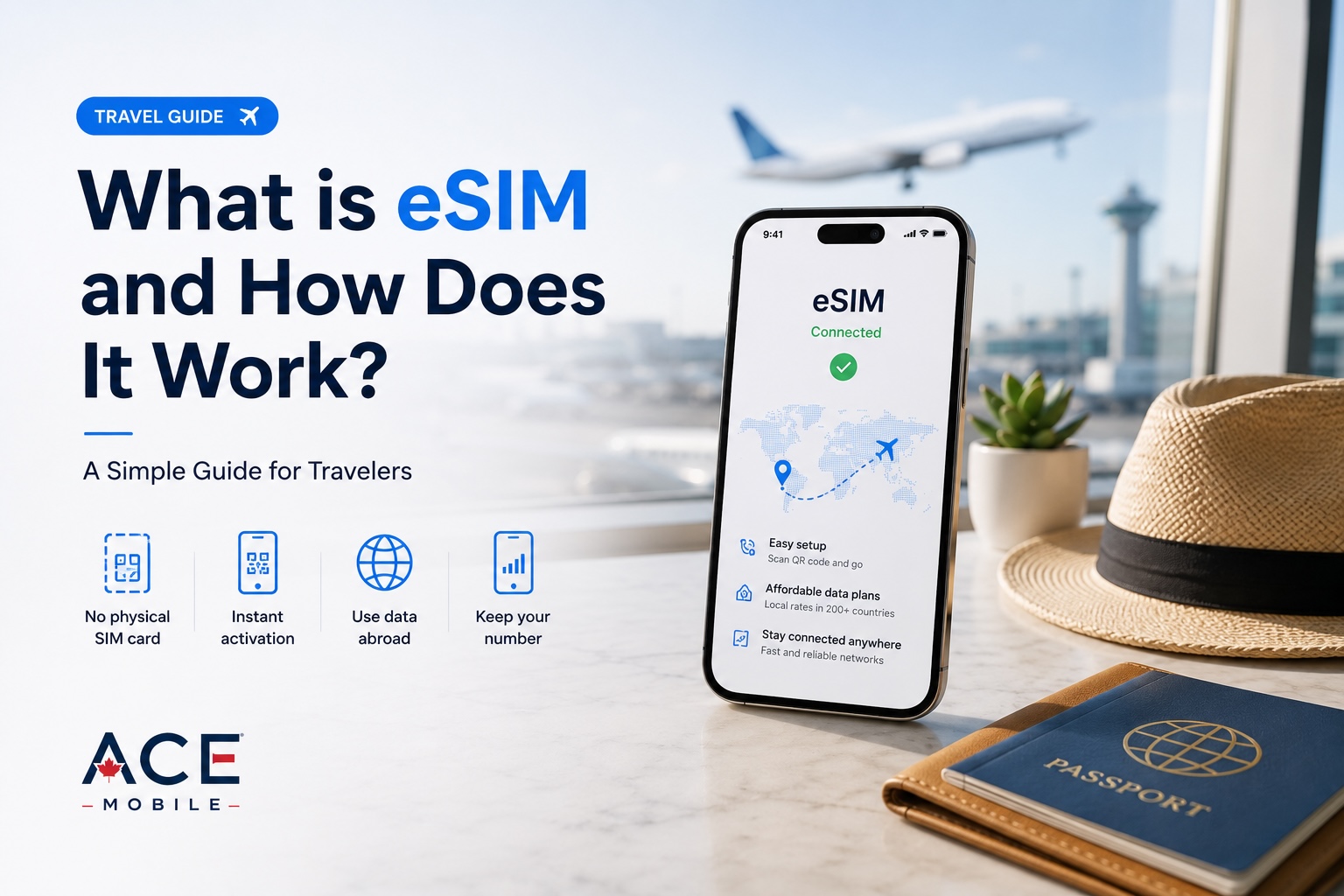
What Is eSIM and How Does It Work? A Simple Guide for Travelers
Learn what an eSIM is, how it works on iPhone and Android, and why travelers are switching to eSIM for instant mobile data abroad without changing their phone number.

What Is eSIM and How Does It Work? A Simple Guide for Travelers
Travelers today expect instant connectivity the moment they land. Whether you're arriving in Tokyo, New York, London, or Hong Kong, having mobile data ready immediately has become almost essential.
This is where eSIM technology is changing how people stay connected abroad.
Instead of visiting a mobile store, swapping tiny SIM cards, or paying expensive roaming fees, travelers can now activate mobile data digitally in just a few minutes.
In this guide, we'll explain:
- What an eSIM actually is
- How eSIM works on iPhone and Android
- Whether eSIM changes your phone number
- How travelers use eSIM abroad
- The pros and cons of eSIM
- How to install an eSIM before your trip
---
What Is an eSIM?
An eSIM (embedded SIM) is a digital SIM technology built directly into your phone or device.
Unlike traditional plastic SIM cards, an eSIM does not need to be physically inserted into your phone. Instead, your carrier profile is downloaded digitally.
Think of it like this:
| Traditional SIM | eSIM |
|---|---|
| Physical plastic card | Built into the phone |
| Requires swapping | Activated digitally |
| Easy to lose | Always inside device |
| Usually one carrier at a time | Multiple profiles supported |
Most modern smartphones now support eSIM, including:
- iPhone XS and newer
- Samsung Galaxy S20 and newer
- Google Pixel devices
- Many modern iPads
- Some laptops and tablets
---
How Does eSIM Work?
When you purchase an eSIM plan, the carrier provides a digital activation profile.
Usually this happens through:
- QR code activation
- In-app installation
- Automatic carrier provisioning
Your phone downloads the carrier settings directly through the internet.
After installation, your device can connect to supported mobile networks just like a normal SIM card.
The process typically looks like this:
- Purchase an eSIM plan online
- Receive a QR code or activation link
- Open your phone's eSIM settings
- Scan the QR code
- Enable the eSIM line
- Start using mobile data
For travelers, this means you can install your travel data plan before departure and connect immediately after landing.
---
Does eSIM Change Your Phone Number?
One of the most common questions travelers ask is:
“Will I lose my original phone number if I use an eSIM?”
In most cases, no.
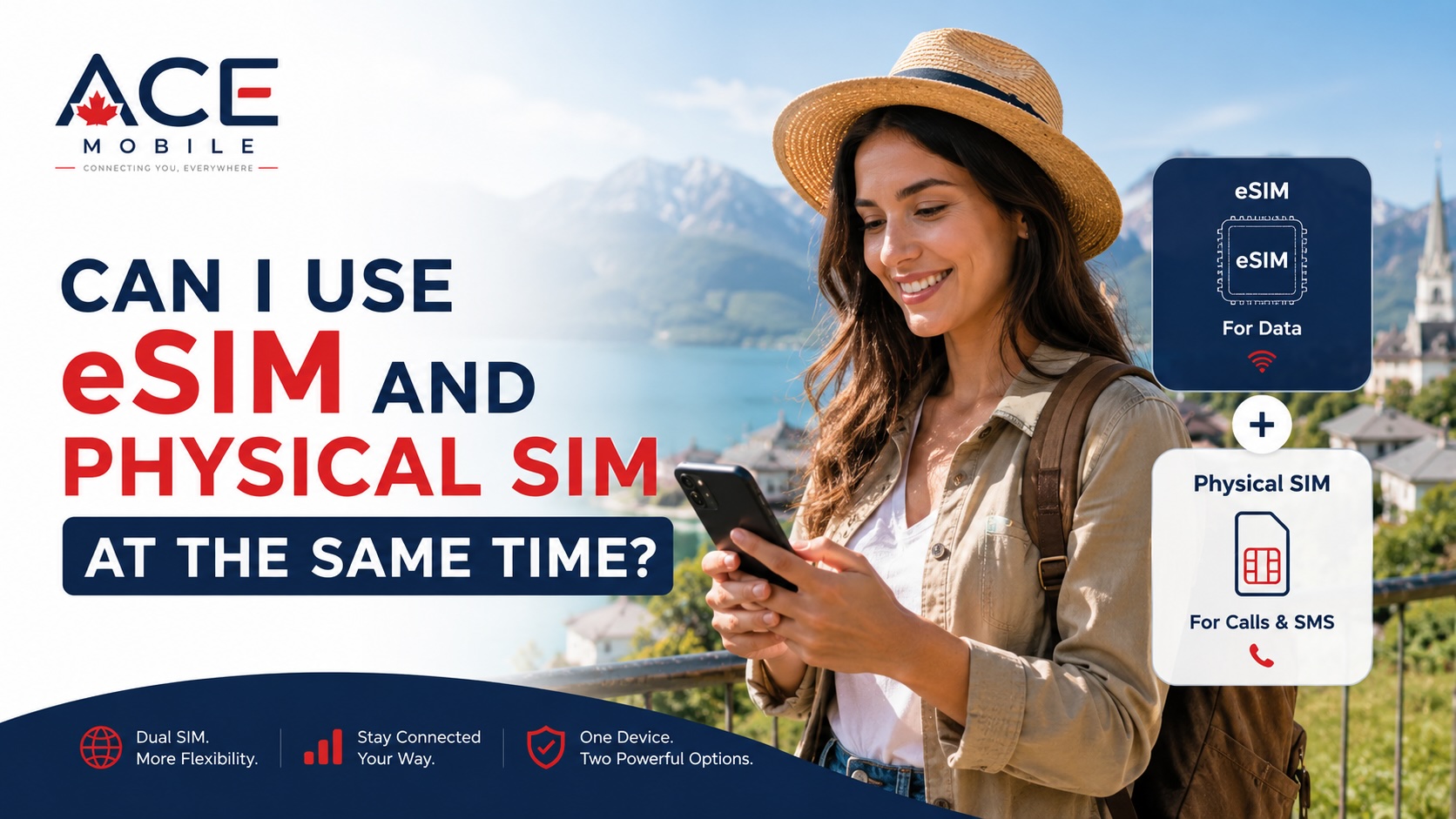
Modern smartphones support Dual SIM functionality, meaning you can:
- Keep your original physical SIM active
- Use an eSIM for travel data
- Continue receiving calls and SMS on your regular number
For example:
| SIM Type | Usage |
|---|---|
| Physical SIM | Your home number |
| Travel eSIM | Mobile data abroad |
This setup is especially useful for:
- WhatsApp verification
- Banking SMS codes
- Business calls
- Keeping your normal contacts reachable
---
Why Travelers Use eSIM
Travel eSIM adoption has grown rapidly because it solves many traditional roaming problems.
1. Avoid Expensive Roaming Fees
International roaming charges from major carriers can become extremely expensive.
A travel eSIM usually offers:
- Local data pricing
- Regional plans
- Fixed prepaid pricing
- No surprise bills
---
2. Instant Activation
Traditional SIM cards often require:
- Airport kiosks
- Passport verification
- SIM swapping
- Manual setup
eSIM removes most of these steps.
You can often activate service within minutes.
---
3. Keep Your Original SIM
Travelers no longer need to remove their home SIM card.
This is especially useful because tiny SIM cards are easy to lose during travel.
---
4. Multiple Plans on One Device
Many phones support storing several eSIM profiles simultaneously.
You might have:
- Home carrier
- Business line
- Japan eSIM
- Europe regional eSIM
all saved on one phone.
---
Is eSIM Better Than Physical SIM?
For most travelers, eSIM offers major convenience advantages.
Advantages of eSIM
- No physical SIM swapping
- Faster setup
- Better for frequent travelers
- Easier international activation
- Multiple profiles supported
- Great for dual SIM usage
Potential Downsides
- Older phones may not support eSIM
- Some carriers still limit eSIM transfers
- Switching devices can occasionally require reactivation
- Setup may feel unfamiliar for first-time users
Overall, eSIM is becoming the standard direction of the mobile industry.
---
Does eSIM Work on iPhone and Android?
Yes.
Both iPhone and Android devices now widely support eSIM.
iPhone eSIM Support
Apple introduced eSIM support starting with:
- iPhone XS
- iPhone XR
- iPhone 11 series and newer
Recent US iPhone models are even eSIM-only.
Android eSIM Support
Many Android devices support eSIM, including:
- Google Pixel
- Samsung Galaxy S series
- Samsung Fold series
- Some Motorola devices
However, Android compatibility varies more by region and carrier.
Always check your device compatibility before purchasing an eSIM plan.
---
How to Install an eSIM
The setup process is usually simple.
On iPhone
- Open Settings
- Tap Cellular
- Tap Add eSIM
- Scan the QR code
- Follow activation instructions
On Android
- Open Settings
- Tap Network & Internet
- Tap SIMs
- Tap Add eSIM
- Scan the QR code
Installation usually takes only a few minutes.
---
Tips Before Traveling With eSIM
Before your trip, it helps to prepare a few things.
Install Before Departure
Airport Wi-Fi can sometimes be unreliable.
Installing your eSIM before leaving home is recommended.
---
Confirm Device Compatibility
Not every phone supports eSIM.
Carrier locks may also affect compatibility.
---
Label Your SIMs Clearly
If using dual SIM, naming your lines can help:
- “Home SIM”
- “Travel Data”
- “Japan eSIM”
This prevents accidental roaming usage.
---
Is eSIM Safe?
Yes.
eSIM technology follows industry security standards developed by the GSMA (Global System for Mobile Communications Association).
In many ways, eSIM can actually be safer because:
- There is no removable SIM to lose
- SIM theft becomes harder
- Profiles are digitally managed
However, travelers should still:
- Use secure Wi-Fi
- Protect QR codes
- Enable device passcodes
---
The Future of eSIM
The mobile industry is rapidly moving toward eSIM adoption.
Airlines, travel companies, and smartphone manufacturers increasingly support digital-first connectivity experiences.
As more devices become eSIM compatible, travelers will likely see:
- Faster activation
- Better regional plans
- More seamless roaming alternatives
- Improved multi-device connectivity
For international travelers, eSIM is quickly becoming one of the easiest ways to stay connected abroad.
---
Final Thoughts
eSIM technology makes travel connectivity dramatically simpler.
Instead of searching for SIM cards after landing or worrying about roaming charges, travelers can activate mobile data digitally and stay connected almost instantly.
For most modern smartphone users, using a travel eSIM means:
- Faster setup
- Lower roaming costs
- Keeping your original number
- Easier international travel connectivity
As global travel continues to become more connected, eSIM is likely to become the new standard for mobile data abroad.
---
References
- GSMA — eSIM Technology Overview
https://www.gsma.com/esim/
- Apple Support — Using Dual SIM with eSIM
https://support.apple.com/
- Google Pixel Help — Use eSIM on Pixel
https://support.google.com/pixelphone/
- Samsung Support — eSIM Setup Guide
https://www.samsung.com/support/
- ACE Mobile
https://acemobile.ca/